Start locally
Every local area has expertise, resources and people to value. This is where my work begins: recognising what is already there and connecting education, business and public institutions.
Fabiana Rocchi European project consultancy and cooperation
I support schools on their internationalisation journey and connect people, expertise and local communities. So that European experiences create value beyond mobility.
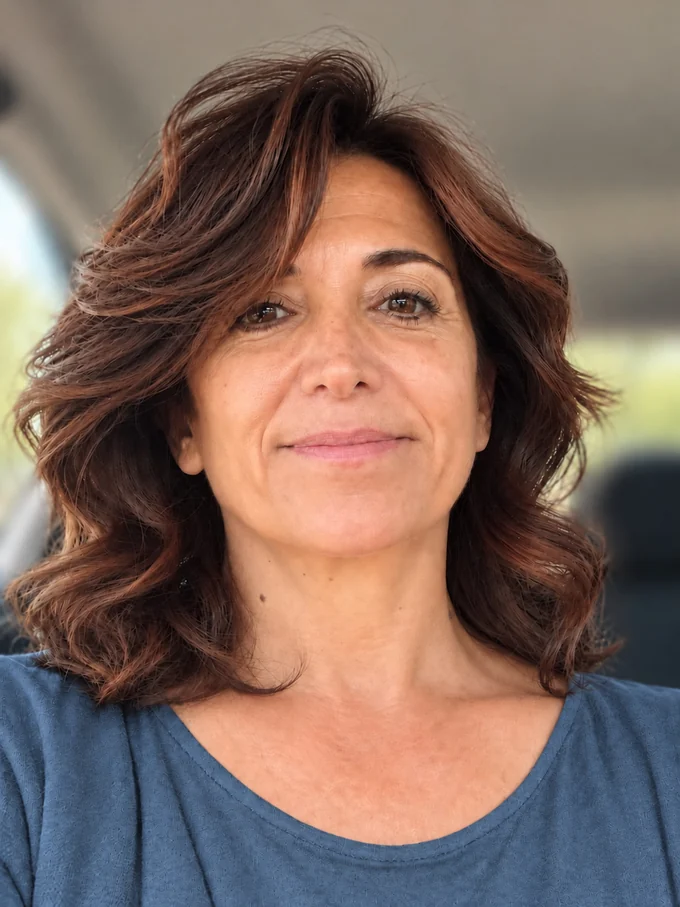
From local communities to Europe: a journey of connections, collaboration and opportunities.
My professional journey began with a background in economics and experience in tourism and local development. Working on tourism development plans taught me to recognise the value of relationships between institutions, businesses and communities.
I brought the same vision to European project development: connecting expertise and people to create shared opportunities, extending my work from local communities to Europe.
Every local area has expertise, resources and people to value. This is where my work begins: recognising what is already there and connecting education, business and public institutions.
Schools, universities, public bodies, associations, businesses and services are part of the same ecosystem. A network of horizontal relationships, built on trust and complementary expertise.
Incoming and outgoing mobility complement each other. Hosting, sharing and developing projects together can benefit the whole educational community and the local area, beyond those who participate directly.
What makes a local community strong is not its individual organisations, but the quality of the relationships they build together.
I began my career working on local tourism development plans. It was there that I realised how the value of a place depends not only on its resources, but above all on its organisations’ ability to recognise them, connect them and make the most of them through shared strategies.
In my view, local development has never been the result of one organisation acting alone. Rather, it grows from cooperation between institutions, businesses, associations, organisations and communities, each contributing complementary expertise, resources and perspectives.
When I began working on European projects, I did not change my way of thinking. I simply brought this vision from tourism into education, broadening its international dimension.
Schools, universities, public bodies, associations, representative organisations, small and large businesses and training providers are part of the same local ecosystem. Accommodation, transport and catering providers also contribute: their organisational and economic support can make initiatives more accessible and sustainable.
I see this ecosystem not as a hierarchy, but as a network of horizontal relationships, based on collaboration, trust and complementary expertise.
From this perspective, internationalisation means more than creating opportunities to travel abroad. It also means enabling a local community to host, engage in dialogue, share experiences and develop joint projects with organisations from other countries.
Outgoing and incoming mobility become two complementary dimensions of the same process. International opportunities are not limited to those who participate directly in mobility: they can benefit the entire educational community and the local area hosting them.
This is the thinking that guides my work: starting locally, valuing existing expertise and building connections beyond the local area, through reciprocal relationships.
In the Chieti–Pescara area, this vision takes practical shape through a network of relationships and collaborations connecting education, business, institutions and local services with international partners.
I see this approach as transferable: not a model to reproduce mechanically, but a method that can be adapted to the characteristics, resources and needs of other European communities.
Because, ultimately, what makes a local community strong is not its individual organisations, but the quality of the relationships they build together.
Education and skills
From economics, tourism and local development to European projects and support for schools.
Language skills · Native Italian speaker. Other languages spoken: English and French.
A separate role. I am President of Submeet – Incontrarsi per Crescere APS, a non-profit association for social promotion that independently develops and manages European projects, primarily in vocational education and training (VET) and adult education (ADU). The association is part of the local ecosystem in Pescara and Chieti. My role within the association is separate from the consultancy assignments I undertake as an independent professional, primarily with schools and other public bodies.
02 / My vision
Internationalisation takes on a broader meaning when visitors encounter not only the host school, but also the place in which it operates: institutions, businesses, associations, services, culture and communities.
The local ecosystem I help develop is particularly rooted in the Chieti and Pescara area, where I mainly work and build connections between schools, public bodies, businesses and organisations. From this base, my work extends to schools and partners throughout Italy and abroad, as the testimonials from people I collaborate with also show. The local area is the starting point: European cooperation connects it with other contexts, enabling us to share expertise and create new opportunities.
Relationships, expertise and agreed rates help create a coordinated, accessible hosting experience that makes the most of local resources.
Students, teachers and organisations can bring knowledge, practices and new perspectives back to their own communities, helping to create change.
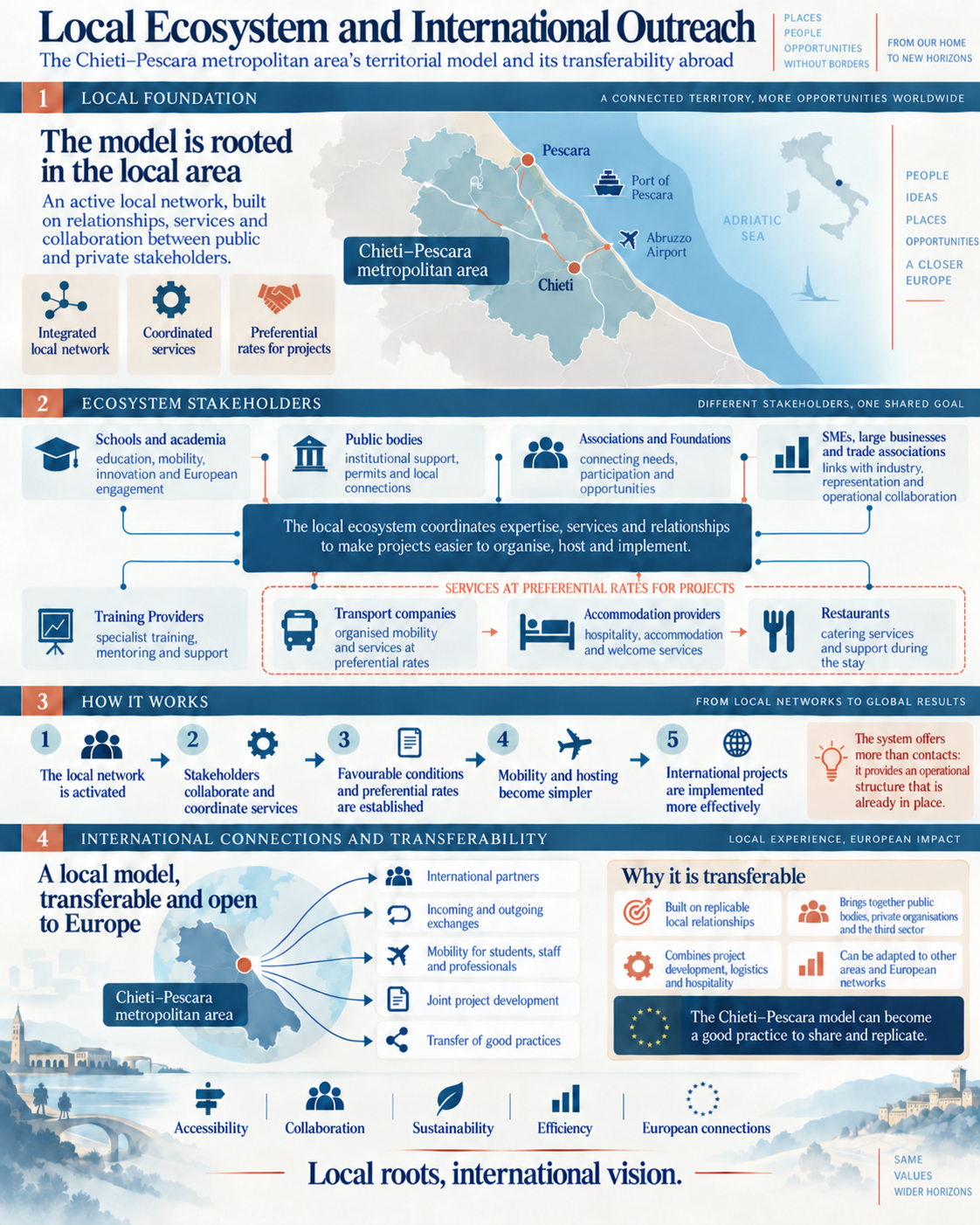
A project’s value is not measured only by the number of mobility activities delivered. It also lies in what stays with the host community and what participants bring back to the places they come from.
Experience, skills and cooperation can strengthen organisations, overcome rivalries between institutions and open new opportunities for economic and social development.
Mobility is the tool. Cooperation is the method. Sustainable impact is the goal.
03 / Areas of expertise
Six complementary areas of consultancy and support: a pathway to build together that helps schools develop skills, independence and lasting international relationships, rather than standardised packages.
Pathways and strategies to strengthen schools’ European dimension, beyond individual mobility experiences.
Needs analysis, setting objectives, Erasmus+ applications, accreditation and partnerships. Project development support also covers national education programmes.
Support and training for coordinators, teachers and staff involved in projects, strengthening their skills and operational independence.
Finding and connecting with European partners, incoming and outgoing mobility, and relationships with local networks and host organisations.
Support with activity coordination, documentation, organisation, administration and logistics, respecting the school’s roles and responsibilities.
Disseminating results, transferring practices, sustaining collaboration and making the most of experiences within educational communities.
The common thread
Opening schools to a European perspective, designing projects together, training teams, connecting communities, managing activities and consolidating learning: complementary steps in a single process of organisational capacity building.
The value lies not only in the completed project, but also in the skills that remain, the Erasmus team’s greater independence and the relationships the school can continue to draw on. The school always retains project authorship, decision-making authority and responsibility.
The project belongs to the school. My professional contribution supports the people and expertise that make it possible.
04 / How I work
I do not work in place of schools. I work with schools, as an external expert, facilitating dialogue between different professionals and connections with the local and international ecosystem.
Headteachers, administrative managers and offices, teachers, Erasmus coordinators, students and families have different priorities, responsibilities and ways of communicating. I help bring together their educational, project, administrative and organisational needs.
I facilitate dialogue between educational institutions, public bodies, associations, businesses, training providers and local organisations, connecting local opportunities with European partners.
Schools retain institutional authorship, ownership and decision-making authority over their projects. My technical and professional contribution supports their capacity to design, develop and manage their own internationalisation pathways.
05 / My initiatives
Beyond individual Erasmus+ projects, I promote opportunities for networking, training and cooperation. Each initiative grows from dialogue with organisations and a shared wish to turn relationships into practical opportunities.
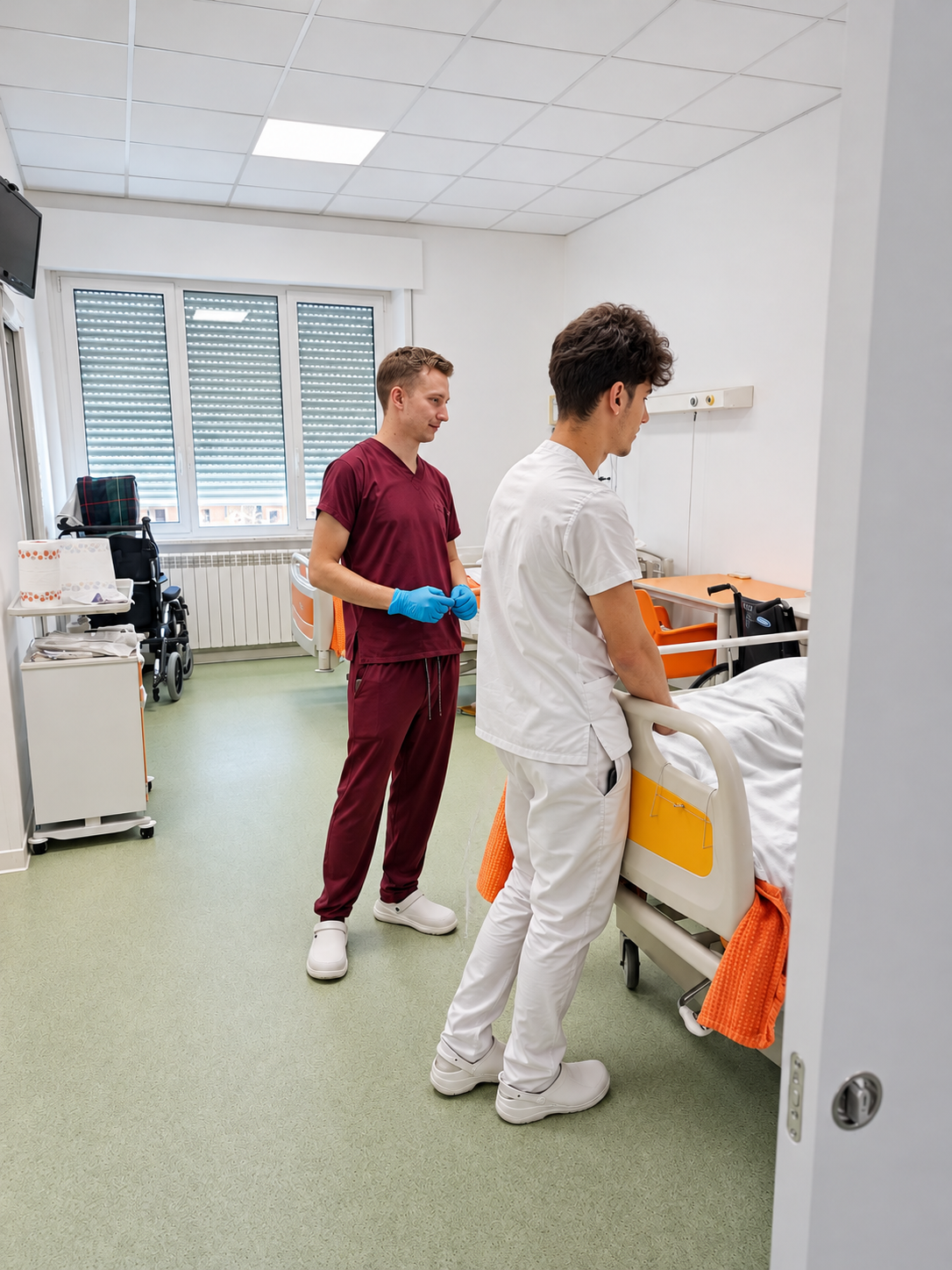
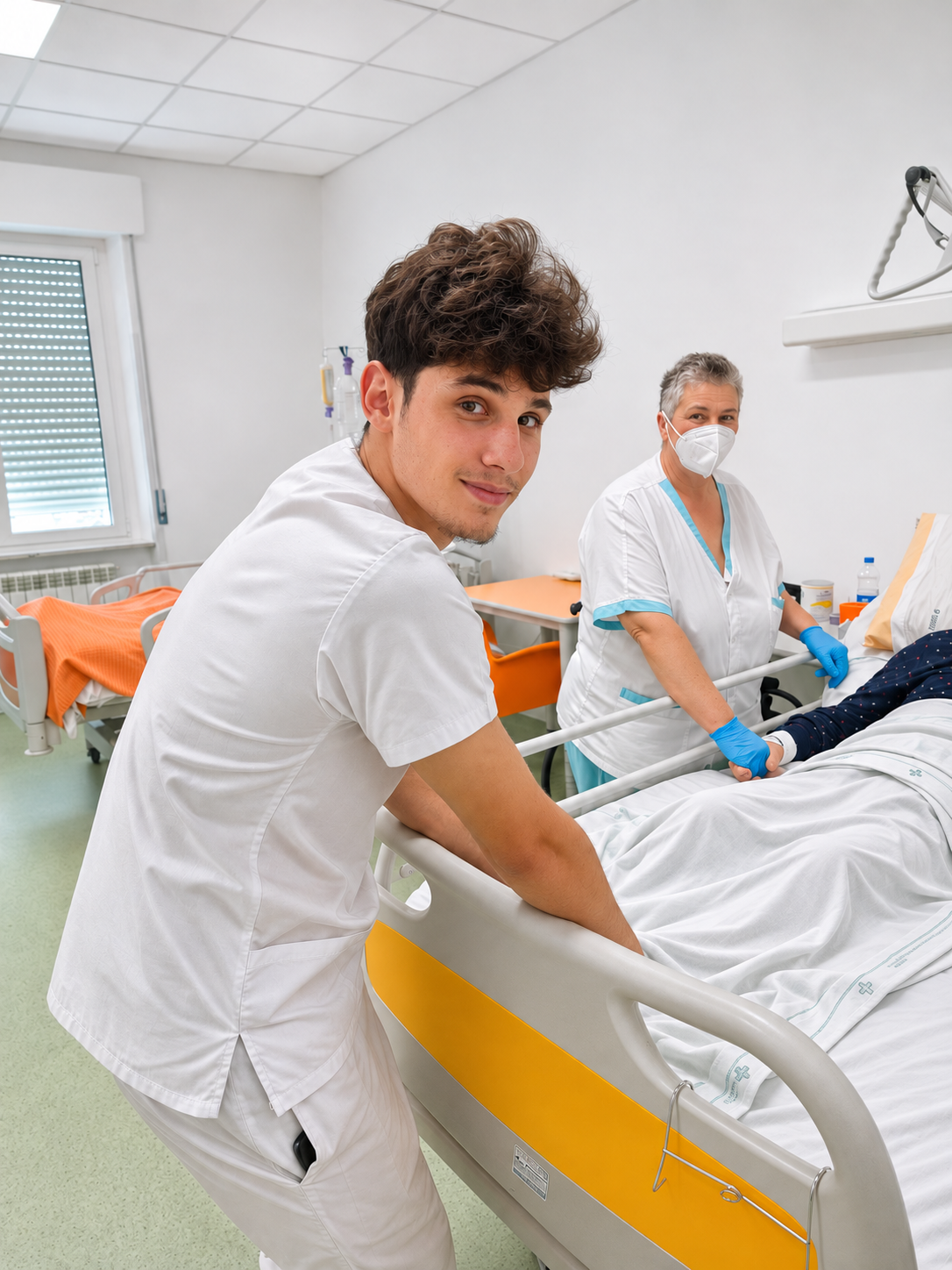
Students from Școala Postliceală Teologico-Sanitară “Sfântul Iosif” in Craiova have completed four weeks of practical training at the Istituto San Francesco d’Assisi in Vasto, part of Fondazione Padre Alberto Mileno ETS.
Healthcare staff praised the trainees’ preparation, skills and commitment. Thank you to the host institution’s staff and to Monica Wojcicki and Laura Andrei for supporting this partnership.
A new group is expected in May 2027 for another four-week placement. Project code 2026-RO01-KA121-VET-000408109.
Read about mobility quality in Perspectives
For updates and future experiences, follow me on LinkedIn and Facebook.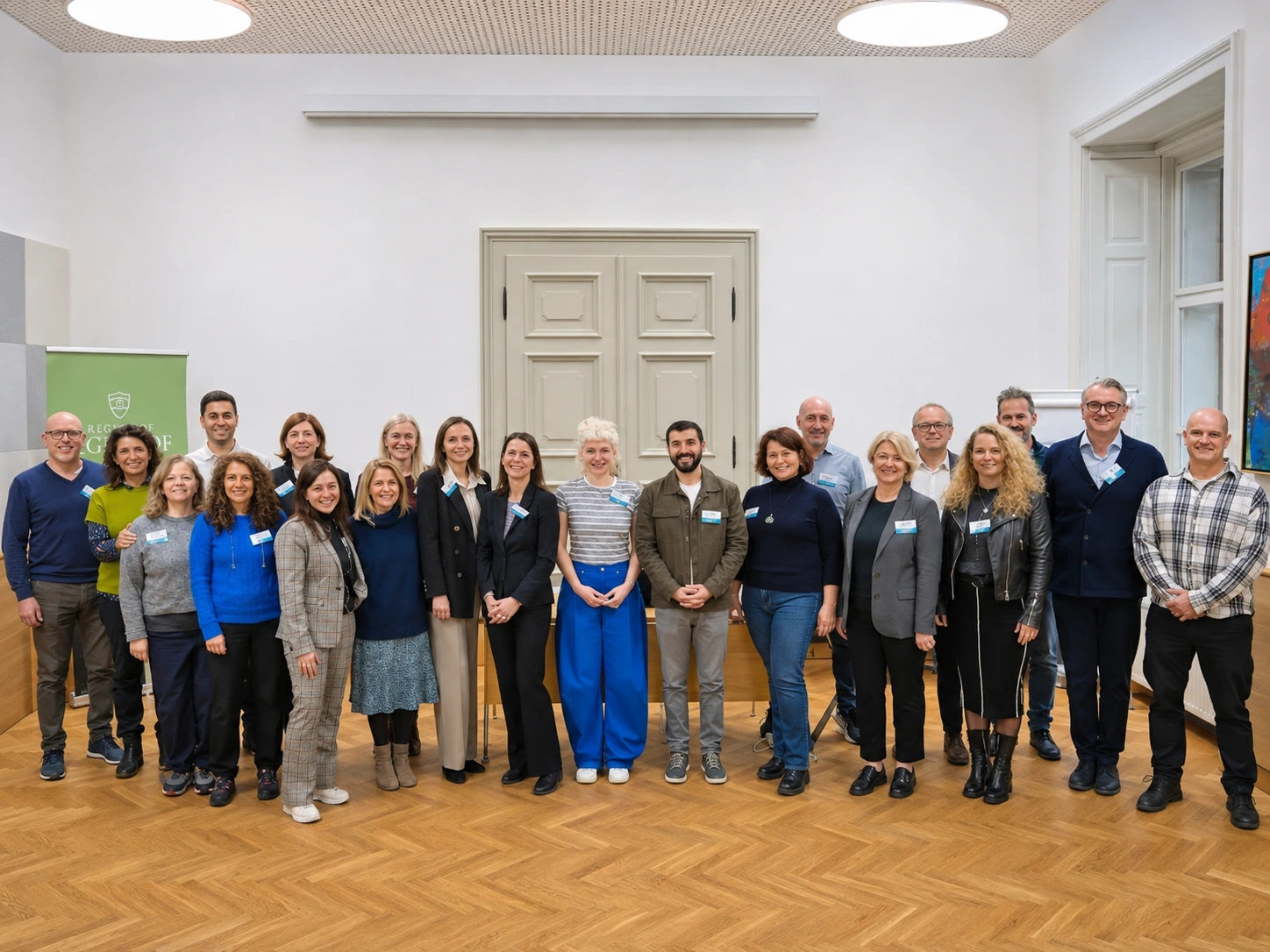
The first European Mobility Hub Forum in the Austrian press
The initiative I helped to develop and promote together with Bildungshaus Schloss Retzhof, held in Wagna from 10 to 12 November 2026, has been featured in the Austrian news outlet LeibnitzOnline.
The article highlights the vision behind the Forum. Moving beyond occasional partnerships between individual organisations to build a European network of local ecosystems, offering broader, more reliable and sustainable educational opportunities.
After many years of experience in international mobility, I am increasingly convinced that the future of internationalisation lies in structured cooperation between schools, training providers, businesses and local communities.
Wagna was the first step. The challenge now is to turn this vision into a practical, operational European network.
Read the full article on LeibnitzOnline · 13 November 2026 ↗
To follow the initiative’s progress, follow me on LinkedIn and Facebook.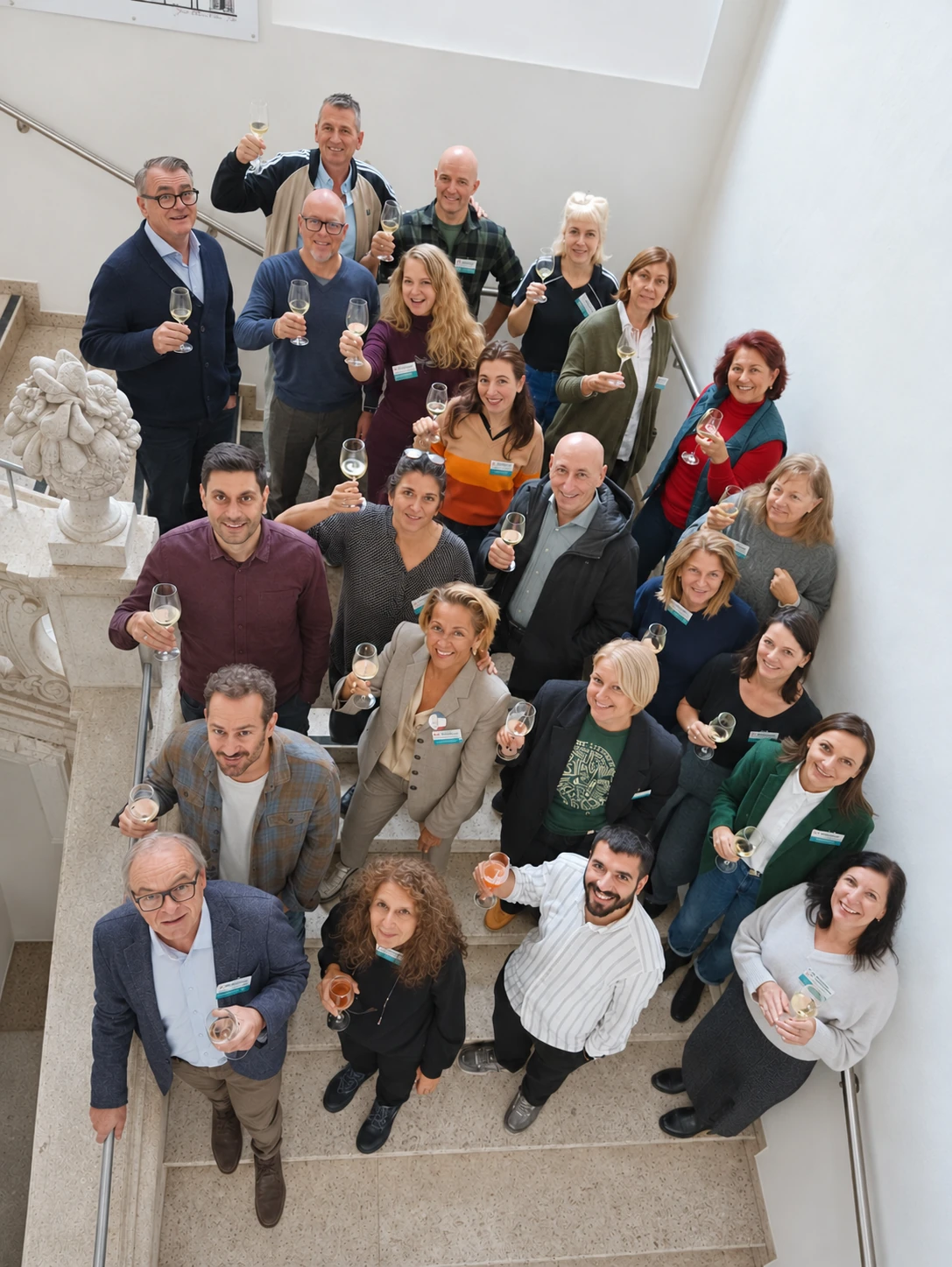
The first European Mobility Hub Forum, organised by Bildungshaus Schloss Retzhof and Submeet APS in Wagna, Austria, from 10 to 12 November 2026, has concluded on a positive note. Representatives from 13 countries committed to working together over the coming months to develop a European network of local mobility hubs.
The discussions confirmed a shared need for lasting connections between territories. Schools, training providers, businesses, public authorities and civil society organisations can share their relationships, expertise and resources to improve the quality and impact of European mobility.
I take away the participants’ enthusiasm and their determination to turn this shared vision into practical cooperation. The next step will be to define common principles, responsibilities and ways of working, building trust and opportunities between local ecosystems.
For more information, follow us on LinkedIn and Facebook.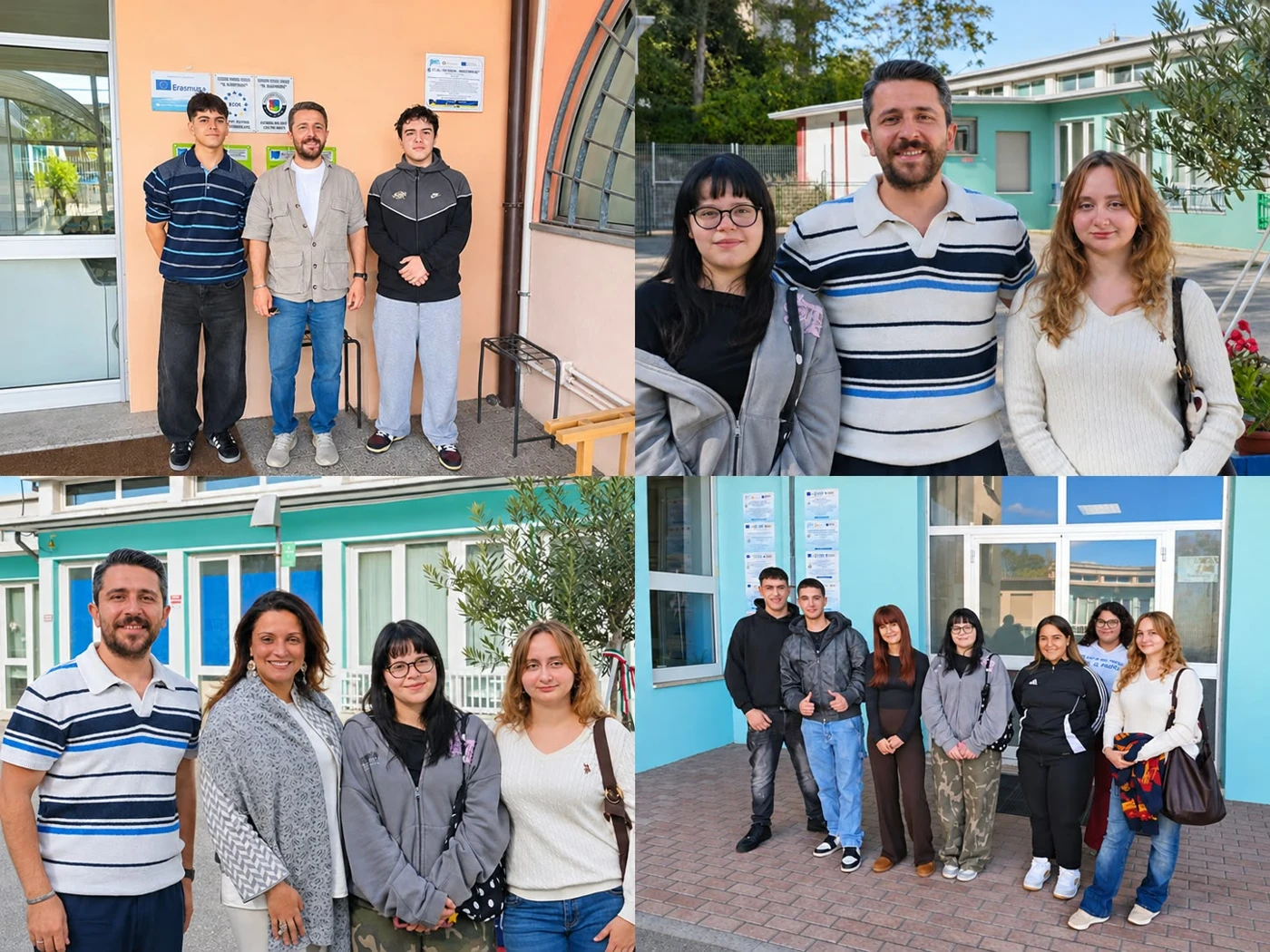
Erasmus+ | School Education | Long-term individual pupil mobility
Cooperation with the Istanbul Provincial Directorate of National Education brings Turkish students, all from Küçükçekmece Mustafa Barut Anadolu Lisesi, to experience learning in schools in Abruzzo.
ITCG «Aterno-Manthonè» in Pescara welcomes two students, while IIS «U. Pomilio – Galiani – De Sterlich» in Chieti hosts two female students from 26 October to 26 November 2026.
An opportunity to participate in everyday school life, develop independence and language skills, and build relationships through intercultural exchange.
Thank you to Mustafa ŞAHİN, the headteachers of the host schools, Simonetta Longo and Elvira Pagliuca, the Erasmus coordinators, Marianna Zuccarini and Monica Bernabeo, and their respective internationalisation teams for making this educational and everyday-life experience possible.
Further information available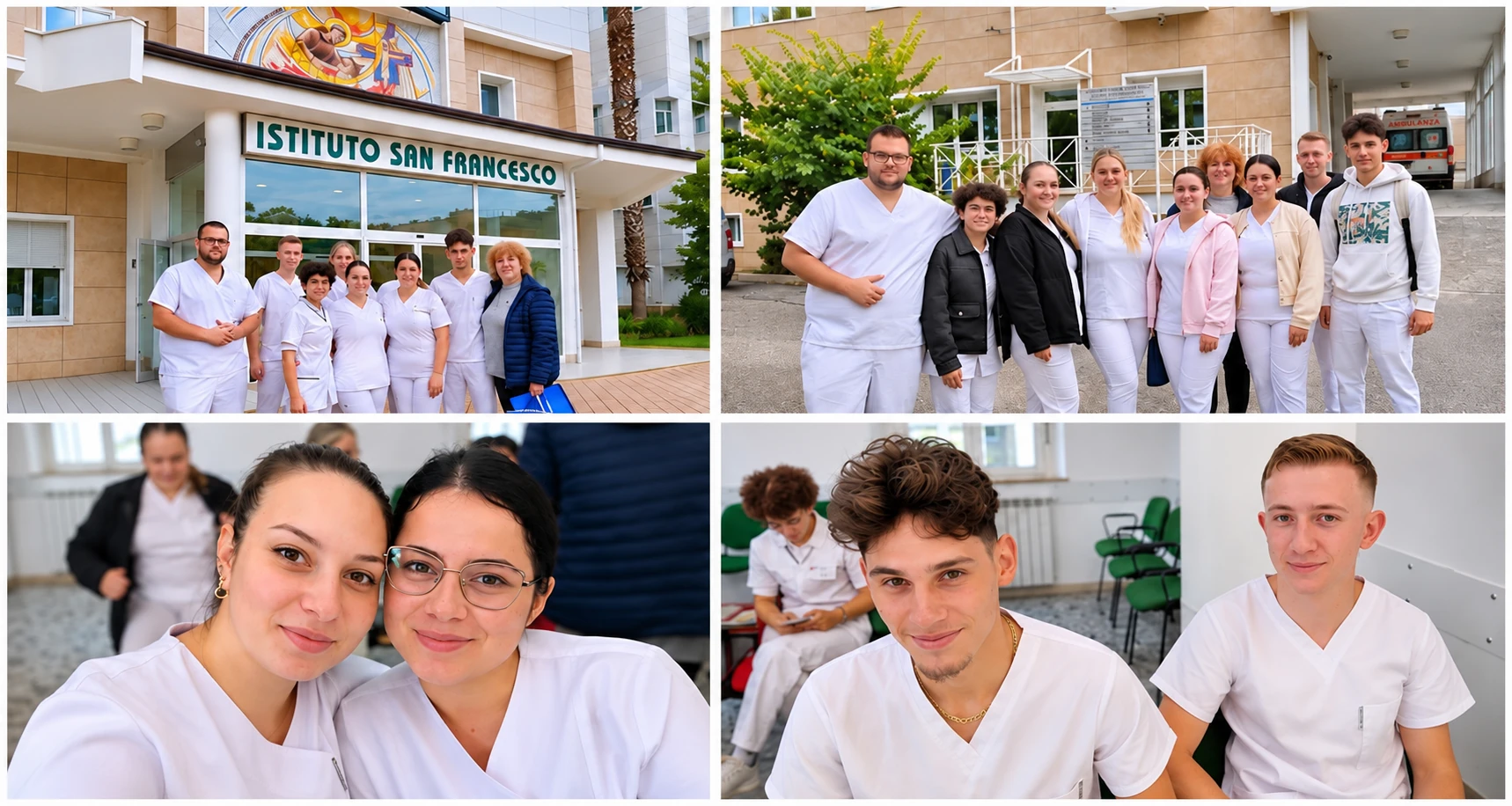
Erasmus+ | VET | 26 October – 20 November 2026 | Placement in rehabilitation care
Students from Școala Postliceală Teologico-Sanitară «Sfântul Iosif» in Craiova, Romania, undertake a month of practical training in the rehabilitation departments of the Istituto San Francesco d’Assisi, part of Fondazione Padre Alberto Mileno ETS, in Vasto.
The experience forms part of an established partnership that enables future nurses each year to engage with a different professional setting, work alongside healthcare staff and develop their skills through practice.
The programme, developed with coordinators Monica Wojcicki and Laura Andrei, also includes job shadowing opportunities to encourage the exchange of expertise, methods and good practice.
A relationship between education and the local community that sustains European cooperation and turns it into concrete learning opportunities.
Further information available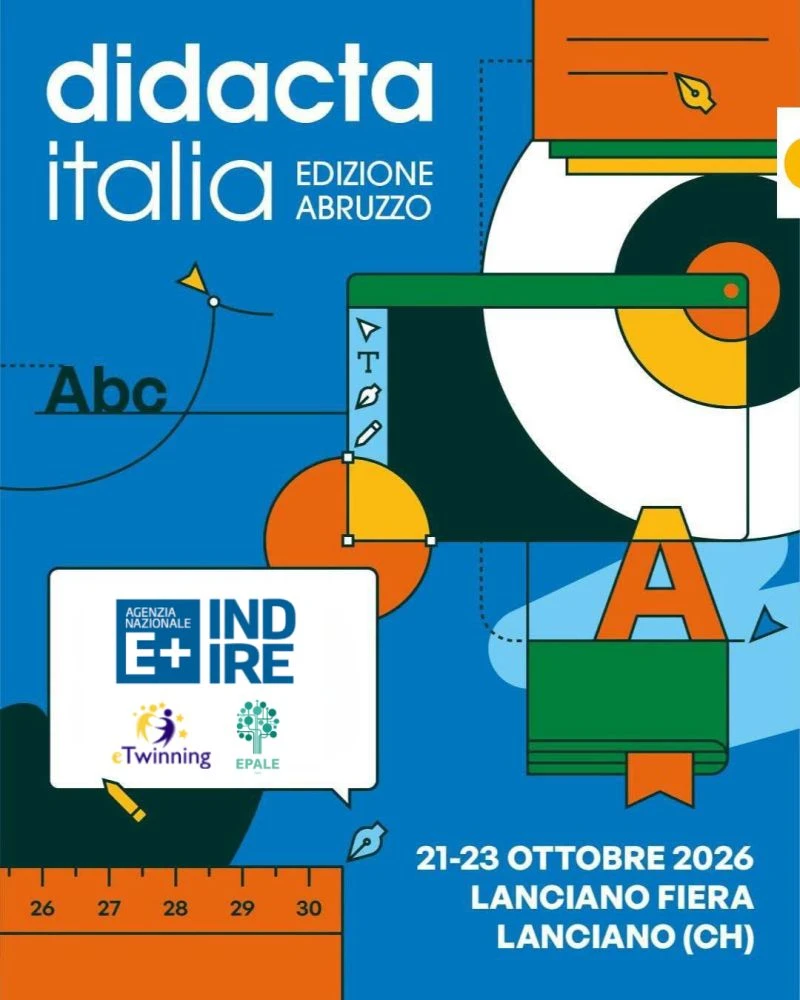
Submeet – Incontrarsi per crescere APS, the association I chair, has been invited to Didacta Italia – Abruzzo Edition to present DIGI-DISABILITY, an Erasmus+ project dedicated to developing the digital skills of adults with disabilities.
An opportunity to share a good practice in European cooperation and discuss how associations, educational institutions and local networks can contribute to more accessible and inclusive education.
Further information on social media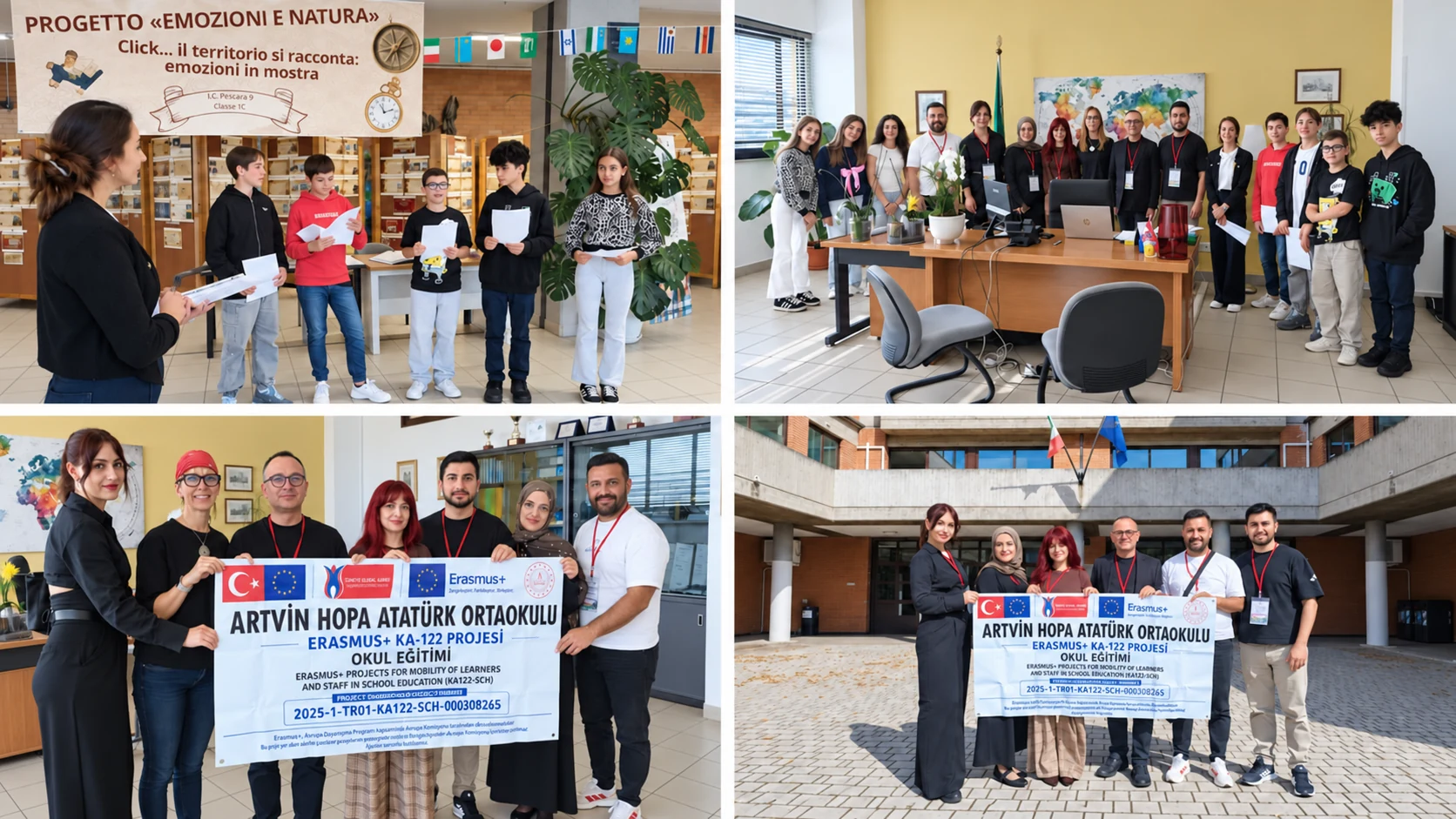
Erasmus+ | Job Shadowing | School Education
Six teachers from Artvin Hopa Atatürk Ortaokulu, a school in Hopa in north-eastern Türkiye, are taking part in five days of job shadowing at Istituto Comprensivo Pescara 9, led by Headteacher Prof.ssa Simona Marinelli.
Organised within Erasmus+ KA122-SCH, the experience provides an opportunity to observe teaching methods in lower secondary education and gain a deeper understanding of the Italian education system through direct exchanges with teachers and visits to the different school sites.
A practical example of internationalisation that begins with hosting, values the expertise of school communities and turns the exchange of good practices into an opportunity for mutual growth.
Further information availableTraining and discussions for Erasmus teams to share tools, working methods and experiences and develop partnerships. The aim is to strengthen skills, independence and collaboration in managing European projects.
Let’s discuss training ↗Incoming exchanges and mobility involving students, teachers and local communities, extending international experiences to those who do not directly participate in mobility abroad.
Let’s build an exchange ↗International meetings, training and reciprocal exchanges: a space that can grow with new experiences.
Let’s talkReflections on European project development, educational cooperation and the future of internationalisation.
A space to share observations, questions and proposals developed through more than twenty years of experience in European education and training programmes.
An opportunity to reflect on what works, what could be improved and the new prospects for European cooperation, alongside the experiences already undertaken.
Because developing projects also means questioning the value and impact of what we do.
Learning outcomes, recognised skills and lasting partnerships. A reflection on mobility quality, drawing on the healthcare placement of students from Craiova in Vasto.
Read the reflectionThe essential role of local contacts in managing international work placements and the risk of confusing organisational support with the delegation of project responsibilities.
Read the reflection →The current KA1 model has expanded mobility opportunities for pupils and school staff. But has it truly strengthened educational cooperation between European schools?
From Comenius partnerships and KA229 to Erasmus accreditations, a reflection on changes in the programme and the prospects for the 2028–2034 programming period.
Read the reflection →07 / Testimonials
The people I work with share, in their own words, their experience of my work and our collaboration.
08 / Frequently asked questions
How I work, which responsibilities remain with the school and what we can build together.
Let’s discuss your needsI work under a professional appointment as an external expert, coordinating with the headteacher, Erasmus coordinators, teachers and other staff involved. The assignment is defined around the institution’s objectives and needs.
This is probably the most important question in these FAQs, because it clarifies the purpose of my work: no, I am not a support agency. I work alongside the school, bringing experience, expertise and relationships to support its internationalisation.
Ownership of the projects, educational choices and responsibility for decisions remain with the school. My contribution forms part of the Erasmus team’s work and develops through dialogue with the headteacher, teachers and administrative staff, each with their own role.
Activities take shape because the school wants them, shares in their development and recognises them as part of its own growth. We work together as a team of complementary professionals, from project development to organisational and administrative management, towards a common goal: moving beyond the boundaries of the local area, engaging internationally and bringing new skills, relationships and opportunities back to the school community.
The school leads its own journey. I help make it possible.
My work is not limited to Erasmus+. I also support schools within Italy’s National Programme “School and Skills” 2021–2027, measures under the National Recovery and Resilience Plan (PNRR), and other funding opportunities aligned with their needs and objectives.
The starting point is the development pathway the school wishes to pursue. My contribution is to connect educational needs, funding opportunities and organisational capacity, supporting the team in project development and implementation.
Different programmes, one shared goal: strengthening the school’s skills and opportunities for growth.
The project is based on the school’s needs and priorities. The school retains institutional authorship, ownership and decision-making authority. I can make a practical contribution to project development and writing the application, working alongside the team.
I support teachers in designing and organising international learning experiences, helping align projects, partners and activities. Teaching decisions and educational responsibility remain with the school’s relevant professionals.
I provide technical, documentation and organisational support and facilitate communication between those involved, respecting the school’s procedures, competencies and administrative responsibilities.
They bring international experiences into the school and the local community, involving people who do not travel abroad. Incoming and outgoing mobility become complementary dimensions of a relationship between communities and local ecosystems.
Relationships with accommodation providers, catering services, transport operators and other local businesses make it possible to agree dedicated rates and conditions for mobility activities. The aim is to develop quality arrangements with sustainable costs that reflect the resources available within the project. Each proposal is assessed with the school, taking account of the budget, duration and participants’ needs.
Agreements and local relationships help make better use of resources while maintaining a focus on the quality of the experience.
I offer training focused on capacity building: strengthening the skills, independence and ability to work together of the whole organisation in European project development.
Training involves everyone contributing to the project: school leaders, Erasmus representatives and coordinators, teachers, DSGAs (Directors of General and Administrative Services) and administrative staff. I pay particular attention to DSGAs, because their contribution is essential to connect project objectives with administrative and organisational management.
The courses cover project development, preparation and management of activities, partnerships, documentation, dissemination and making the most of results. A cross-cutting objective is to improve communication between people who use different professional languages, building a shared understanding of objectives, procedures and responsibilities. This helps prevent misunderstandings and reduce conflict, facilitating dialogue and coordination among those involved.
The aim is to make project implementation simpler and better coordinated, while leaving the organisation with skills it can continue to use over time.
I am President of Submeet – Incontrarsi per Crescere APS, a non-profit association for social promotion that independently develops and manages European projects, primarily in vocational education and training (VET) and adult education (ADU). The association is part of the local ecosystem in Pescara and Chieti. My role within the association is separate from the consultancy assignments I undertake as an independent professional, primarily with schools and other public bodies.
Get in touch
Tell me about your organisation and what you want to build. Let’s start with your needs, ideas and the people to involve.


